The Dude Abides

Because I have written a book claiming that the surfer is the most important archetype of resistance to work and to the artificially perpetuated scarcity that capital uses as a weapon against our natural aversion to colonized time, I am certainly pleased when I see a story like this, about the food stamp surfer dude, icon of the right to be lazy:

http://www.youtube.com/watch?v=bP_izYhdehY

http://www.npr.org/blogs/itsallpolitics/2013/09/19/223796325/lobster-boy-looms-large-in-food-stamp-debate

But I’m mad, too. This story came out two months ago. And I have not seen ONE SINGLE defense of this Spicoli-esque surfer slacker who is audacious enough to assume that there is enough food in America that he could just, you know, have some.

Resentment has given this story quite the pair of legs. Objectively, it’s dumb — a right-wing falsehood about who food stamp recipients really are. Of course the truth is that the vast majority of food stamp recipients actually work, or are elderly or children. Welfare exists (to the extent that it still does) to help those who are disadvantaged in the labor market. And it’s obvious that the poor have less opportunity to work for wages sufficient to meet their needs. That’s what makes them poor. Thus, we have a social wage organized on the preferential option for the least advantaged. Seems reasonable. However, it’s precisely this aspect of American welfare that has made it so vulnerable. To liberals, throwing down to help out the poor is no biggie, so the right-wing anti-welfare crowd must just be a bunch of assholes. But for those of us interested in making American life less desperate, this moralism just doesn’t cut it as analysis.

Consider that the only income transfers that survive are policies that benefit everyone — like Social Security and Medicare. That’s why capital’s political servants have been trying so hard, for so long, to introduce means-testing into the calculations for these programs. They know that if they begin the process of making it a program for the needy, it’ll soon enough be vulnerable. And then they can privatize all that public wealth and fritter it away on the Wall Street casino tables while their media lackeys repeat the mantra, “there’s not enough.” Americans have successfully resisted this for a long time — until, that is, their beloved “progressive” president Obama proposed a form of means-testing that would be the death knell of those programs. There is no middle ground here. If these programs stop being universal, they stop being universally popular. And then they will be murdered by the same resentment that’s endangering food stamps. So if we don’t want to be eating cat food or begging for health care when we’re old, we’d better understand this basic dynamic of social policy. If everybody benefits, the program is hard to kill. If some pay in and others benefit, it’s basically already gone.

Why? Why can’t people just be cool and give according to their abilities and take according to their needs? Work. Work is why resentment festers and bubbles up when a working taxpayer subsidizes someone else’s perceived nonwork. It’s a big part of the reason that social welfare policy in the US is such a disaster: the intended beneficiaries are the poor, who in the right-wing anti-welfare discourse that has totally shaped public policy since the eighties, simply won’t work. It doesn’t matter that food stamps and income transfers of one kind or another make up such a miniscule portion of the budget, or that corporate subsidies exceed it by a factor of, well, around ten gazillion. Or that most poor people work their asses off.

Facts don’t matter in politics. Ideas do. The image of the welfare cheat, the lazy surfer, the slacker sponger, trumps the numbers every time. Why? Because it tells us something — something potentially unifying and revolutionary, even — about American culture.

Namely, that we hate work. If Americans loved work as much as we say we do, we’d whistle while we work and gladly give away the pecuniary rewards to the poor needy fellows or the misguided slackers who don’t have enough of it. Instead, Americans use the work ethic as cultural cover for their resentment against the perceived slacker who is taking some of what they have earned with their sacrifice. But it’s not the work ethic that makes them hate on the slacker surfer or the Cadillac-driving welfare queen. Just the opposite. It’s the fact that it seems so unfair that surfer boy (or his parallel, ghetto girl) gets to be free and the working stiff watching him on tv is so profoundly unfree.

What we ought to get across to the resentment crowd is not that they need to be more realistic or altruistic, but that it’s ok to embrace what makes them so pissed about the lobster-eating food stamp surfer — his freedom. And their lack of it. The left rejoinder to the food stamp discourse should not be the cold facts — food stamp recipients work really hard, honest! It should be… hey, it sounds like you might wanna go surfing and eat free lobster too. Let’s talk about that. That’s where altruism ends and solidarity (and hey… a guaranteed annual income for all?) begins.

the anti-work discourse is gaining steam

Check out this essay of Joseph Kay’s, which references this one by David Graeber on bullshit jobs, who also wrote this great new one calling out neoliberalism as a war on the imagination above all. What’s so exciting is that the anti-work line is not only being embraced but also being framed in terms of political imagination and everyday life.

Slacker politics is having a moment. Let’s build it.

Oceanic Futures: the Mataroa Summer Seminar

Reflections on Mataroa

Anyone who talks about revolution and class struggle without referring explicitly to everyday life — without grasping what is subversive about love and positive in the refusal of constraints — has a corpse in his mouth. Raoul Vaneigem, 1967

Nearly a year ago, I wrote a short piece about the policies of austerity and the Euro “crisis” entitled, in part, The Ikarian Dream. Little did I know then what this dream of mine was about to produce. I should have, though, because I am constantly making the case that there is nothing more materially transformative than a dream, nothing that fuels radical movements more powerfully than the imagination. That was in large part why I wrote the essay in the first place — to situate the American fantasy about the culture of southern Europe within the politics of a refusal of alienated labor and an embrace of all the vital forces that collude to resist it.

Well, thanks to that little piece, within the year, I miraculously found myself on Ikaria. Wacky! It all still feels like a dream to me — one in which all the wonderful, myriad attachments that I am deeply grateful to say form my very full life, were, for the first time in years, absent. I was free. Halfway around the world in the place I’d imagined. And just as it’s incredibly difficult to articulate the meaning of one’s dreams, without the help of an analyst anyway, I’m finding Mataroa really hard to write about with any rational power.

I have to start somewhere, though, so I suppose I should begin with the sea. Everything else in this world does. And it was fully the dominant motif, in form and in substance, of the Mataroa seminar, named, of course, after the storied ship of exiles that set sail from Piraeus and headed to Paris carrying its world-shaking exile cargo, especially the brilliant, severely underappreciated Greek anti-Stalinist then-Trot Cornelius Castoriadius, who went on to found the school of thought that in large part inspired the uprisings we call Paris 68. “All power to the imagination,” the Paris graffiti shouted, invoking Castoriadus (the Situationists never acknowledged their debt to him, but whatever). “Workers of all countries, enjoy!”

But within the Mataroa seminar, the sea wasn’t just a metaphor. It was fully, as American hip hoppers say, in effect. Look, it’s no accident that Freud calls our deepest, most primitive, most unconscious and radically creative psychic space “oceanic.” One simply can’t relate to the sea without tapping, in some way, into the deepest parts of the unconscious, the phylogenetic and ontogenetic well that is the creative fount of language and of all attempts to intervene in the world once we’ve come to the traumatic realization that we are not, sadly, totally one with it. When we see the sea, we remember/imagine that there is enough, that we are all connected, that gratification and flow can be the true order of things. And that we could dive back in if only we’d just free ourselves.

Castoriadius was a heavily psychoanalytic cat, and I keep wondering if he had a thought like this on his Mataroa journey. That unconscious memory, our imaginary of connection, of pleasure, of peace, of abundance in time and in material life, of everyday vitality not deferred but really lived, is at the root of all liberatory politics. And like the psychoanalytic one, this political practice can’t be effective on the level of the abstract. The transference has to really happen. The oceanic relentlessly insists on being, on creating. Castoriadus recasts Lacan’s imaginary as a poeisis, less an insubstantial image than a producing, a bringing-forth:

“…we are beings of the imagination and of the imaginary. The emergence of these determinations itself manifests the creation and vis formandi that appertain to being as such, but these determinations also concretely realize the mode of being of the creation and vis formandi specific to the properly human. Here we can do no more than note the fact that this vis formandi is accompanied, in the human sphere, by a libido formandi: to the potential for creation found in being in general, the human sphere adds a desire for formation. I call this potential and this desire the ‘poietic’ element of humanity.”

When the imaginary is in effect it unfolds, becomes, as method actors say, really real.

On Ikaria, it did. It transcended the ideas in people’s papers — broadly speaking, that another world is possible, and being fought for as we speak — and came to life. Still, the ideas were pretty fucking cool too. To me, they felt like home. Many of them I’d been writing about, advocating for, for a long time, so that was exciting. For starters, awhile back I’d abandoned that old Marxist canard about crisis being an unintended consequence of the logic of capital, and one that the working class can exploit for revolutionary purposes. Not. Crisis is a weapon used relentlessly, and increasingly, since the 1970s to discipline the working class by cultivating conditions of fear and impotence in those who would otherwise never accept the economic and political logic that this discourse supports. Crisis is a neoliberal strategy that must be met with refusal, not embrace. Mataroa knows this.

Most heartwarming to me was the Mataroan sensibility about the cultural politics of freedom. In our fight against the forces that would make every moment of the lifeworld and every iota of nature into fodder for profit, that would let nothing just be, I know that culture is our strongest and most resilient weapon. In particular, a culture that embraces the aspect of Mediterranean life that our oppressors disparage as “laziness” — what I call slacker politics and others called “de-growth” — was all over the meeting. This refusal to accept paid labor as the center of life and pleasure as marginal to it, is what essentially opposes the dominating logic of capital. In my analysis, this refusal is both a means to a better life and more power — through the fact that when the working class oversupplies a commodity like labor, its leverage to make effective demands goes down, and vice versa — and an end in itself. Among highly-paid workers and the working poor in America, in the high-tech first world and the proto-slavery of the third, overwork is both killing our bodies and spirits and compromising any leverage we might have to make a change.

I love the inspiration that the Mediterranean gives to all those stuck in the cultural prison of the Protestant work ethic — the idea that it’s good that we should spend our precious moments working, doing useless shit to promote a destructive system, rather than, you know, really living. It’s a scam, but because it’s tapped into people’s guilt about desire and pleasure and connection, it’s had some insanely powerful effects, even now, when capital has amassed more guns and money and big data on all of us than it would seem to ever need. Why? Because capital knows, just like Max Weber did, that without the cultural intervention of the Protestant uptightness about valorizing work and avoiding pleasure, it can’t stay in power. It knows, as us Mataroans do, that a new imaginary can change the whole game.

Ultimately, that was what was so powerful about Mataroa. We enacted a different imaginary. We didn’t just talk about ideas of liberation and connection and leisure. We lived them. We swam. We roadtripped. We danced. We kicked it in an open air taverna on the sand, eating sardines, drinking wine, staring out at the impossibly blue sea while we talked and laughed and talked some more. Everyone seemed really open, even, shockingly, me. I dove in. I loosened up, open to thinking new thoughts, and I feel more alive because of it. And that feeling of being alive — that’s where all good politics begins.

I allowed myself to imagine things I’d previously resisted. Although I went in pretty critical of one of the animating political ideas of the conference, the commons, ready to argue that the whole idea is based on stultifying, non-cosmopolitan concepts of identity and mutual obligation and rights to land and resources that resemble the conventions of property more than I’m comfortable with, instead, I listened. And what I heard was that the commons is more than an idea for me to critique — it’s the stakes of people’s very real struggles against the imposition of crisis, poverty, desperation. Most important in this respect, I went to a panegiri, the meaning of which was framed for me by one of my hosts and comrades, as an instance of this thing, the commons. Well, if a giant village party tangibly buzzing with libidinal energy, where people are drinking and dancing all night to a seriously fabulous band, is the commons, then hey, I’m in.

I haven’t changed my mind about this entirely. I’m an American girl, so I like the commercial market more than my Mediterranean (or even other American) comrades do. Not as a totalizing logic, of course, but as a space. In Mediterranean parlance, I prefer the wildness, the potential for novelty, the mystery and the strangers and the tricksters of the souk to the earnest communitarianism of the commons. And although I will never move from certain central principles, the Mataroa oceanic has opened my mind to other ideas, other spaces, other logics. I have come to see that if pleasure and connection and a more natural rhythm of life is the animating principle of your political imagination, then we are allies.

Out of Mataroa, we comrades will build a radical network. A think tank, taking a strategic page from the insanely successful playbook of Milton Friedman and the Chicago Boys. They imagined a new world, analyzed the state of friendly and opposing forces on the ground so that they’d intervene most effectively, and never stopped pushing their ideas. Now we live in the world their audacity built; their dream is our nightmare. But where they gained power because they planned the violence and domination that could follow the cultivation of economic crisis, we will get stronger every time we strategize on the basis of cultivating the anti-crisis — the pleasure imaginary that connects us all through our oceanic origins. Where they imagine the profits that shock-and-awe crisis make possible, we imagine the transformations that appealing to the desires of vibrant, pulsating beings, fully embodied, experiencing joy and pain and anger and deep laughter, and love, can produce. Because of this, we will win.

Anyway, this is what I’ve always meant when I’ve advocated for a vitalist cultural strategy to oppose the cold dominating logic of capital. I dreamed it, and then it happened. In Ikaria, everything I’ve always said about political strategy came true. Substance and form – the ideas and the fabric of everyday life – came together. Because you simply can’t oppose the logic of crisis — the idea that everything is so fucking serious that you’d better just put your heads down and get to work, now! and leave the thinking to the authorities, by the way — by reiterating that kind of very dead seriousness. You can only really do it with an everyday politics that opposes that logic not just at the level of substantive ideas but of formal relations of time and space as well, relations that first and foremost privilege the life force, the power of comradeship and laughter.

In Castoriadus’s words, “To pose the question of a new society is to pose the problem of an extraordinary cultural creation. And the question that is posed, and that I pose to you, is the following: Do we have before us, some precursory and premonitory signs of this cultural creation?” He is asking if there are signs of the oceanic imaginary at play within contemporary society. From the Mediterranean comes the answer: yes.

Mataroa Summer Seminar Video

I am pleased to announce that a short video about the Mataroa Collective and the seminar in Ikaria that founded it is up online. I am so incredibly proud to be part of this. Do yourself a favor and check it out here!


Libido and the slacker politics of war and peace

Why can’t America stop bombing other countries? Seriously now.

Is it that we are a warmongering, aggressive nation? It’s certainly plausible. We’ve got more than our share of guns, racism, bullying, road rage. And it’s a basic tenet of psychoanalysis that aggressiveness is unleashed when the libido is repressed. Libido (love and other yummy stuff) and destrudo (anger, aggression, the will to punish) are the two poles of our primitive psyche. According to Freud (and Marcuse, my favorite interpreter) when libido goes unsatisfied, the will to destroy gets stronger. In hippie talk, only love — fiery, strong, sweet, passionate — can keep the wolves of our nature at bay. Well, all twerking aside, the American libido looks like shit these days. Maybe this is our problem.

Overwork, underpay, stress, boredom, the ever-ascendant bullshit of the bean counters at the top and the slave drivers at the bottom — no wonder we are subjected to a constant barrage of pharmaceutical ads hawking pills that will make it tolerable to get through the workday, and make it possible to get it up once it’s over. Take a pill to fall asleep. One to wake up. And don’t forget the one that keeps you from killing yourself at that stupid meeting. From the looks of things, Americans are in bad shape.

If you don’t believe me, check out this ad, seriously the most pathetic fucking thing I think I’ve ever seen. A market research department for a giant, highly-profitable corporation came to the conclusion that enough Americans could identify with this poor fucking sap that they ought to put this commercial on television. Here, my friends, is what is wrong with America in a convenient disposable cup:

Here’s the thing. This poor guy is not getting off on bombing anybody. The dark angels of his nature, the destructive passion within, is getting no more satisfaction from American imperialism than his fun time desires are from that stupid pudding.

The wasted energy that he calls his life has just been beaten down by the work and the traffic and the boss and the bullshit. It’s not even aggressiveness. It’s worse. He’s numb, deadened. That’s why this guy may even know quite well that we go to war not because it’s right or we’re angry but because folks who are rich and powerful benefit from it. But he feels totally powerless to do anything but make himself fat with the only happiness in his life, some fake chocolate and a mildly affectionate but totally boring relationship with his long-suffering kid.

Sure, we have armed tea partiers and radio call-in yellers and right wing angry-ass nutbags, and many of these guys do provide the regime major cover for their imperial adventures. But so do “liberals.” The politics of aggression don’t explain why most Americans oppose going to war in Syria — even under the sway of a mainstream media that frames the debate as either saving the Syrians or not saving the Syrians — but are resigned to the reality that it’s going to happen no matter what.

As David Graeber points out in a brilliant recent essay here, the neoliberal project over the last several decades has been, more than anything else, a war on the imagination. On the sense that things could be different, that another world is possible. That, for instance, all the incredible wealth on planet earth could nourish people and places rather than destroy them. That people could be free. That life could hold greater, far more intense pleasures in it than the consumer goods that are supposed to make up for all the concessions of everyday life.

And why? Why has quashing people’s dreams been even more strategically important to the Man than, for instance, even making money? Because our imagination is fueled by libidinal desire, a desire that roundly rejects the depressing numbness of the work-squandered life of pudding man. And all the contemporary insanities, like endless war and chronic disaster, that this kind of life makes people tolerate as inevitable. Elites around the world are still constantly guarding against another libidinal revolution, against the demands for a free and pleasurable everyday life not centered around the banality of the workplace but the joys of really living it up. From the police state hysteria around any whiff of collective protest to the massive private national security and intelligence-gathering apparatus, what looks like power might actually just be shrill, hysterical, and massively insecure.

What are they so terrified of, anyway? The most powerful force in the world, that’s what. Perhaps they know that we are done settling for pudding.

What I learned this summer

I guess my summer began in earnest when I broke my face.

It was really weird. There I was, after a wild and super fun night with lots of good friends and music at a bar down the street from my house, riding home on my bike. Fast. I always ride fast; it’s an outlet for aggression, or something. On my bike, I feel like a badass. I feel silly saying this, after smashing my face on the asphalt, but riding quick and sure makes me feel cool. It’s sort of a kid moment.

But I’m not a kid. I’m a grown woman with two kids of my own, and I have no business riding that fast, standing up, acting like a thirteen-year old boy. I guess I also had no business riding down the giant hill in Prospect Park standing up with outstretched arms either, but I used to do that about twice a day. I’m glad I didn’t kill myself any of those times. But I’m also glad I had those experiences. It was stupid, but it was fun as hell. It felt like flying.

My face is fucked up forever now, but it’s not that noticeable, everyone tells me. I notice it, though. I am asymmetrical. And that’s just how it is for me now. My only consolation came when I was reading about American movies in the seventies and came across the phrase “the broken-faced good looks of an Al Pacino.” I have reframed my disfigurement as broken-faced good looks. Framing is everything, I have always found.

I have learned a couple of things from my accident. The first is about pain and trauma, which I didn’t understand before. But in the days afterward, the pain was unbearable when the pills wore off. And it wasn’t just the intensity of the pain. I mean, I’ve borne children. No, it’s the fact that after trauma, the pain holds the experience within it. It’s incredible, actually. But the pain is the feeling of the event. The pain in my face was one with the feeling of the impact, the bones breaking, over and over. It’s intense, and terrible. So I’d like to take this opportunity to give a little shout out to painkiller. It is merciful and good.

But another lesson came my way too. About attachment. I have tried for so many years to be zen and non-attached, to lose my hooked-ness, my neurosis, my inability to just let life be. I’ve made some progress, but I’ve never lost it. Until, it seems, now. I don’t know how long this will last, but for the very first time in a long time I actually feel free.

Let me give you an example of what I mean. The last entry on this blog was my take on capital’s attack on Greece, told through a discussion of the image of one of its islands, Ikaria. Through the magic of the internet, my essay got me invited to a conference on that very island. I’ll have much more to write about that conference on these pages. It was one of my very favorite experiences, ever, and the whole project is overflowing with inspiration and ripe with possibility. For now, remember this word: Mataroa.

Anyway, I was thrilled to be invited, but I was scared. I am generally scared of flying, and I’d never traveled by myself before. Much less to a place where I knew no one. But after my accident, something changed. I got on the plane and, as is my wont, ordered two giant glasses of wine to numb my terror of takeoff. I had a couple of sips, but I stopped. For some weird reason, I couldn’t feel my fear. Where the fuck was it? Shit, if I wasn’t afraid – maybe I was going to die. I think I used to see my fear as protective. Like, if I worried enough, I’d be safe.

But this time was different. The plane started moving, fast, and it felt – shockingly – exhilarating. I was in the back, so I felt the immense power of the engines under me, lifting the plane into the air. It was awesome. As in, I felt awe. And I stopped fearing my own death. For the first time in my life, I knew in my gut – and not just my head – that, in Jim Morrison’s immortal words, “no one here gets out alive.” We’re all going to die. Worry all you want. You can’t change it. Looking down at the Atlantic, and then later at the Aegean over the Greek isles, I felt not afraid but privileged to be up there. Shit, I thought, even if the fucking plane does go down, this is still amazing. Why waste this? Enjoy it.

So I did. I also enjoyed the bumpy landing in the small plane on the windy island. And the winding bus rides on skinny mountain roads, even at night, with no streetlights. Everyone else was fine, but ordinarily I would have been shitting a brick. Not this time. I felt lucky to be driving on those roads, looking down those deep ravines, lucky to be alive.

Being me, I can’t help but see the politics in this. Fear and attachment impede radical politics, as the Man is well aware. For example, the Federal Housing Administration offered cheap home loans to returning (white) veterans in the post-World War II period in the US. Why? Because before the war, during the Depression, the American working class had been getting pretty anti-capitalist. American culture had never been so communist before or since, and we all know the story of the sit-down strikes and the unemployed marches and all the rest.

The welfare-warfare Keynesian response of the postwar US state had a lot of moving parts, but the example of pushing mass homeownership is a key one here. The strategic idea was that homeowners would be less likely to strike, because they’d be afraid to lose the homes that were now “theirs.” To some extent, it worked – the American working class has, since that time, been arguably less militant than its European counterparts, who tend not to own. Property is a form of attachment. So is nationalism, and the new favorite, debt. There are others.

So the Man knows that attachment and fear of loss encourage a docile working class. That means, I think, that an existential being in the moment, a fearless presence with the world and with one another, is a big part of what our side needs to cultivate. (Not least because what we are up against, in terms of the repressive apparatus of the state, is scary as hell.)

I am extra neurotic, but you all don’t need to bust your pretty faces to do what I’m doing now. Take a deep breath. Listen. Feel the breeze on your skin. Vibe the vitality of the people around you. Stop thinking I’m corny. Just do it. It’s so precious, this moment. Defend it.

That, I’m thinking now, is where we begin.

postscript, from late summer 2013: check out Eleni’s Blog in Ikaria, where she wrote this beautiful response, by which I am very touched: http://islgr.wordpress.com/2013/07/30/my-dear-blog-ツ-summer/. Read all the other posts, too… this is one super cool person.

Ramadan Slackers

Perhaps the hours issue can bring together what imperialist war hype has kept separate for too long. The cultural particulars are different, of course, but the essential dynamic is the same there as it is here.

http://www.arabnews.com/news/458892

The Politics of Austerity and the Ikarian Dream

As a longtime fan of the leisurely aspect of European culture, I am always thrilled whenever it makes its way onto the radar screens of Americans, who are, it’s clear, grievously overworked by comparison. Too often, images of Europe are portrayed in the context of a grim new discursive “common sense” about the European lifestyle that say it is a) an unsustainable anachronism and b) onerous and not something Americans would want anyway. When more celebratory images of Euroleisure emerge, I like to think that Americans wonder why we can’t have what European workers have successfully pressed for – long vacations, relatively short hours of work, and the generous social wage that makes free time enjoyable rather than stressful. And when Americans start asking themselves these questions, all kinds of liberatory possibilities open up. In the context of the current continental battle over austerity, which is more than anything a speed-up imposed on the European lifestyle, these images and their reception here in America become especially important.

This is why the buzz around one recent article in particular really warmed my heart. On October 24, 2012, the New York Times Magazine profiled a small Greek island where, as the title proposes, “People Forget to Die.” The author investigates the extraordinary health and longevity of the residents of the island, Ikaria, and finds that their secret is pretty simple – in addition to eating a plant-based, legume-heavy, locally sourced, generally organic diet, the residents of Ikaria are just amazingly chill.

Ikarians have no alarm clocks; they just start the day when they wake up. They work at a leisurely pace and take long lunch breaks and daily naps. Meals are always an occasion for socializing and wine. Life, according to this profile, is relatively carefree and filled with the pleasures of friends and family. The Ikarians’ relationship to time is the polar opposite of ours – whereas in the “developed” world, the abstraction of the clock dominates the concrete reality of each moment, in Ikaria, it’s the reverse. A typical resident is quoted:

“People stay up late here…we wake up late and always take naps. I don’t even open my office until 11 a.m. because no one comes before then.” He took a sip of his wine. “Have you noticed that no one wears a watch here? No clock is working correctly. When you invite someone to lunch, they might come at 10 a.m. or 6 p.m. We simply don’t care about the clock here.” http://www.nytimes.com/2012/10/28/magazine/the-island-where-people-forget-to-die.html?pagewanted=all&_r=0

The article points out that the typical Ikarian has never really experienced the stress of being late.

In terms of the incredibly longevity of the Ikarian people, there are a number of interlocking factors at work: exercise and healthful food are integral to everyday life, a feeling of communal solidarity leaves no one at the mercy of isolation and loneliness (unlike in the US, where we warehouse our elderly in grim wards), everyone gardens and walks a lot, but most important, I think, is the simple fact that the central pursuit of Ikarians seems to be enjoying life. Where Ikarians make pleasure – relaxing, eating and drinking wine with friends, dancing – the center of their lives, Americans have accepted the idea that relaxation and pleasure must be marginal to the real center of life, paid labor and its associated stresses.

The differential effects in terms of health and happiness are clear – the article begins with a story of an Ikarian immigrant to the US who was diagnosed with terminal lung cancer, moved back to the island, stopped stressing and started hanging out with his old friends, and regained his health. Here in the US, we see this kind of lifestyle as “unrealistic.” What is realistic to Americans, though, is actually quite unreasonable – overwork, stress, and an epidemic of preventable disease. Maybe it’s time to rethink our definition of realistic.

The Ikaria article was widely e-mailed and discussed, and the affluent nutrition-obsessed sector of Americans were quick to consume other articles, like “How to Eat Like an Ikarian,” And although almost all of the online commentary waxed nostalgic about this seemingly idyllic, pre-modern lifestyle, not one commenter made the connection between the Ikarian lifestyle and the struggle currently raging in Greece.

Which is strange, given the fact that it’s a more modern and cosmopolitan version of just the kind of relaxed lifestyle identified in the Ikaria article that is precisely the object of the European banking troika (the European Commission, the European Central Bank, and the IMF) and its insanely punishing austerity policies. The very week that the Ikaria article came out, the Times coverage of the Greek crisis included a story on the attempt by the troika to link changes in Greek labor law to a new round of so-called “aid” from the ECB (85% of which goes to recapitalize banks, not to the people who are made to pay for it). In exchange for billions of euros that will keep Greece tied to its European lenders, the government is to continue to sell off public assets, raise taxes, raise the retirement age, cut pensions and public services, and “streamline” “rigid” labor laws that keep the country from being “competitive.”

In the midst of the heated negotiations going on between the Greek government (tilted leftward since last summer’s elections) and the troika, the Greek people themselves continue to demonstrate and resist. Sadly, the American people, potential allies similarly subject to policies of public-sector austerity and the imperatives of private-sector “competitiveness” (also known as profitableness for corporations and banks), seem to be buying the bankers’ analysis of the crisis in the Euro zone. According to this analysis, the Greeks, in the streets striking and rioting against this punishment, are somehow just being unreasonable. This logic insists that they should stop complaining, suck it up, and get to work.

It’s not surprising: all of the “legitimate,” supposedly unbiased news sources approach the issue with the same tone of disdain for the Greeks, who, in this narrative, actually caused the entire European crisis with their lazy, profligate ways. According to the story told by the New York Times, NPR, and the rest of the mainstream media, Greece lied its way into the Eurozone, borrowed beyond its means, blew all the money, and is now in the streets refusing to work off its debts.

This story, of a lazy and irresponsible culture, is best told by influential lightweight Michael Lewis, in his Boomerang: Travels in the New Third World. His chapter on Greece, disparagingly titled “And They Invented Math,” identifies Greek dishonesty and overborrowing as the problem, and Greeks buckling down to pay the piper as the only possible solution: “But this question of whether Greece will repay its debts is really a question of whether Greece will change its culture, and that will happen only if Greeks want to change.” Lewis calls what’s happening in Greece in the wake of the crisis a “total moral collapse” of the society and ends the chapter with a crescendo of paternalistic twatter: “Even if it is technically possible for these people to repay their debts, live within their means, and return to good standing inside the European Union, do they have the inner resources to do it? Or have they so lost their ability to feel connected to anything outside their small worlds that they would rather just shed the obligations?”

The only major challenge to this obnoxious discourse in the mainstream media has come from reliably Keynesian lefty economist and NYT columnist Paul Krugman, who, importantly, corrects the narrative regarding the responsibility of the European banks for the crisis in Greece, but only at the expense of leaving Greek culture out of the matter entirely. And, it seems to me, the culture of the Greek working class is precisely the point.

And although Krugman mistakenly takes the austerity hounds at their word that the policies are therapeutic rather than disciplinary – even in the face of the reality that austerity is actually increasing Greek debt by shrinking the economy – he points out some basic facts that everyone should understand, first and foremost:

Fifteen years ago Greece was no paradise, but it wasn’t in crisis either. Unemployment was high but not catastrophic, and the nation more or less paid its way on world markets, earning enough from exports, tourism, shipping and other sources to more or less pay for its imports. http://www.nytimes.com/2012/06/18/opinion/krugman-greece-as-victim.html

In other words, before central bankers in Germany and France decided that money could be made by bringing Greece and other mellow European countries into the Euro, Greece was fine. Unemployment was relatively high, but unemployment is a far less threatening matter when extended families live together, government pensions are generous, and “unemployed youth” are happily sipping coffee at the café with their friends all day. “Greek culture” simply wasn’t anybody’s problem; in fact, it was a major tourist draw. The country basically had enough to pay its own way and distribute its surplus however its internal class struggle determined. Which was, given the militance of the Greek working class, pretty generous as far as the people were concerned. This was never anyone else’s business, until Greece joined the Euro, was flooded with cheap money, and spent it. Now, the logic goes, the Greeks must suffer for their sins.

Anthropologist and organic intellectual of the Occupy movement David Graeber, in his 2011 Debt: The First 5,000 Years, lays out the ways in which debt has traditionally been used by those in power to accomplish two things: to make people work and to create markets. This was especially true of the European colonial powers taxing their subjects, but Graeber’s analysis traces this dynamic to the economic beginnings of the colonial powers themselves. Debt has always been used as a mechanism to bring people to heel.

Today’s massive lending and its aftermath, the drying up of credit, is working to have precisely this effect. Like the Third World debt that preceded it, Greek debt is a means to compel the Greek people to work harder and longer now that the Euro has linked the largely self-sufficient Greek economy to the larger market of Europe much more intensely. Cheap money and economic integration encouraged Greece to import all kinds of new goodies as well as necessities like food that used to be produced at home, and the withdrawal of credit by international markets is, as we are all witness to today, resulting in a punishing burden of austerity, the object of which is twofold.

First, austerity in public budgets means that public services become unsustainable and selling them off to the highest private bidder seems the only possibility (sound familiar?). From water to airports to government services, the Greeks are indeed being pressured to sell off public assets to pay their bills. So creating indebtedness is, in this case and others, a privatization strategy, attempting to transform public goods into privately profitable ones. Second, the artificially-produced scarcity that austerity policies induce functions as a means to compel populations to work, and work harder. Scarcity breeds desperation, and desperation kills cultures like the one in Ikaria, in which people work to live instead of living to work. So indebtedness and the austerity that results leave only two possibilities for its subjects: stop enjoying life and start hustling to work off the debt. Or resist.

In light of all this, Krugman’s analysis of Greece as victim of the Euro, and his resulting anti-austerity position, is a really welcome corrective to the moralizing about Greek culture that stands in for economic analysis in the American mainstream press. It can help Americans to understand that the Greeks didn’t break Europe – if anything, Europe broke the Greeks. Thus, it’s not really fair to extract payment for northern European lenders off the backs of the Greek people.

However, Krugman’s position, in a classic progressive mistake, discounts the cultural question to avoid “blaming the victim,” but at the expense of understanding the important contours of the struggle. The class struggle, in Greece and elsewhere, rages between the logic of capital on one side and on the other, the counterlogic of the working class, which dreams of life on Ikaria, among other things. Culture is central to the economic battle raging in Greece and around the world; in fact, the culture of leisure and pleasure and people’s autonomy over their own time is precisely what opposes the imperatives of capital to make every moment of life and every iota of the lifeworld into a means to the end of profit.

The story of the struggle against austerity in Greece, and the attitude that similarly-situated Americans ought to have toward Greek resistance, can best be understood when we’re thinking about how smart the Ikarians are to enjoy their lives with friends, food, wine, and plenty of rest and sunshine, and how stupid we are, to waste our precious lives stressed out and working ourselves to death. Gardening your own food is not for everyone, and many of us prefer big-city life to the old-fashioned village. But these are cultural preferences that come to the fore when people are free to constitute time on their own terms. The Ikarians are an image of a culture that privileges pleasure over labor, and that’s the key political point, in Europe and beyond.

Simply put, there is a hidden politics to Ikarian culture that goes even beyond the fact, unmentioned in the New York Times Magazine, that Ikaria is one of the most consistently Communist-voting blocs in all of Greece, and among the most militant in the nation in resisting the new taxation schemes designed to pay bank debts out of the peoples’ incomes, which are already estimated to be down by 30-40%. If you dig Ikaria, whether you know it or not, you support their anti-austerity cultural politics as well as their left-wing electoral politics.

In tracing the origins of capitalism, Marx explains the centrality of human desperation to the ability of capital to generate profit, that is, to exist. From the British enclosure movements that privatized common village lands and thus left the peasants little choice but to look for work to survive, to the contemporary privatization of public goods all over the world, especially in the U.S. (frequently framed as a result of the necessity to pay back debt), capital needs a population with nothing but their labor-power to sell on the market in order to have a reliable, reliably profitable, working class. Artificially created scarcity breeds docile workers; austerity is the creation of this scarcity. Overworked, stressed-out Americans would do well to understand how much the fight against austerity is our fight too.

This is also the story of what’s happening in Greece right now. George Caffentzis explains it best in his recent dispatch from the struggle there:

This experiment [austerity] is being run because the last century of social and class struggle in Europe has made the rate of exploitation and profit too low for capitalists in the Europe of the 21st century. The introduction of the Euro a decade ago was a failed experiment aimed at increasing the profitability of European capital (i.e., capital employed in Europe). It has been a grave disappointment to capitalists. The currency manipulation and the cutting of “transaction costs” the euro allowed were not able to challenge the structures that workers over many strikes, street demonstrations, and eventually war have built to make their lives safer, less risky and longer (and cut the profits of their bosses).

For European capitalism to survive this period of globalization, wages must be reduced, public property, instead of becoming common, must be privatized and whatever wealth workers have accumulated to deal with emergencies must be taxed away to pay the national debt that has been generated to prevent bank failures! Workers of all sorts, industrial and service, skilled and unskilled, undocumented and documented, material and immaterial must be made to cut their demands and accept the minimum (with thanks!). This crisis experiment is a desperate move on the part of the capitalists, of course, but its success depends on treating each country and working class one-at-a-time and keeping them separated as much as possible. http://blog.occupiedlondon.org/2012/08/26/george-caffentzis-summer-2012-a-report-from-greece/

One way to keep the working class of each country separated is to make sure that they never see their struggles as one and the same. The manipulation of the German public into an us-and-them discourse vis-à-vis the Greeks has been a victory for the ruling class on this front; the increasing popularity of the fascist anti-immigrant right in Greece itself is a troubling if not exactly surprising result of us-and-them divisions. However, the rejection of this strategy by the French, who decisively refused the divisive politics of austerity and its scapegoating of the Greeks in their spring 2012 presidential election was a victory for anti-austerity forces and the solidarity they require. And a recent daylong continent-wide general strike to protest austerity policies is an exciting sign that the European working class is resisting the divide-and-conquer strategy of an always quite solidaristic capitalist class.

What the anti-austerity forces need now is for the Americans to see their own budding struggles – for the eradication of student debt and for a restoration of decimated public services especially – as part of an international movement. Painting the Greek people as “irresponsible” for refusing the austerity that would make them desperate and thus docile workers, while encouraging Americans to identify with the interests of corporations, banks, and the seemingly impartial “economic growth,” has been a pretty effective cultural strategy to subvert this potential solidarity. But every now and then, another account slips through the official organs – this time, in the “Body Issue” of the NYT Magazine.

Americans ought to read articles like the one about the health and happiness of the Ikarian people with the understanding that the goal of capitalist austerity is precisely to bring an end to these last places of freedom, to make us all believe that it’s simply not realistic, that killing ourselves working rather than enjoying life with friends and family and good food and wine and dancing is the way life just has to be.

Michael Lewis ends his book with a chapter on America, which he says is next in this whole debt to austerity cycle. Of course, the European situation and the American one are different in key outlines, but Lewis is right on this one. Public and consumer debt – run up to finance wars, tax cuts for the rich, and massive bonuses for Wall Street shell-game scammers – is now being used as a stick to discipline the American working class into working harder for less in the context of increasingly starved-out and then sold-off public services. But this is only the most recent salvo in capital’s decades-long project to use outsourcing, union-busting, debt, and privatization to attack the working-class share of the social product in America and all around the world.

I submit that Americans will only have a fighting chance in the face of this attack if they take impulses like the happy fascination with the people of Ikaria and translate them into a politics of life and freedom against the austerity for the working class that makes profit for corporations.

What if Americans saw the Greeks’ insistence on privileging life over labor as something to celebrate? If we saw our own dreams in the culture of mellow Europe that the Ikarian image is an exaggerated version of? Judging by the reception of the profile of these free-living, fun-loving Ikarians, perhaps we are beginning to. The Occupy uprising of a year ago was a good start, and those movement activists have always been connected to European anti-austerity movements. Now that cross-border organizing needs to go really big. The Europeans are already doing it. It’s certainly too soon to hope that a majority of Americans will join them. But, I think, working to reframe for Americans the meaning of austerity and anti-austerity struggles, and our place in them, is a step in the right direction. Nurturing our Ikarian dreams is a start.

Fix the tired for real

“Fix the Tired”: Cultural Politics and the Struggle for Shorter Hours

In the spring of 2012, McDonald’s began airing a series of commercials exhorting Americans not to “be a chicken” and to “take back your lunch!” The television spots feature a multicultural crew of cubicle slaves aghast at (but clearly a little seduced by) the audacity of the black woman inciting the mini-revolt and heading out to McDonald’s for a lunch break, telling the audience implicitly to join the woman, as an Asian male co-worker does, in striding out of the office and into the local Mickey D’s – here portrayed as an urban outdoor café.

The ads are part of the “It’s Your Lunch – Take It!” campaign, dominated on social media by red posters with messages like “A sesame seed of REVOLT has been planted,” “OVERTHROW the noon meeting,” and “Don’t Be a Chicken – Eat it!” And while much of the progressive blogosphere was horrified by the corporate appropriation of the revolutionary and disruptive discourse that’s newly in the air since the Occupy-dominated fall of 2011, the fact that one of the world’s most sophisticated market research and advertising design behemoths chose to sell burgers and chicken sandwiches by attempting to tap into Americans’ discontent with the contemporary crisis of overwork through which they have been suffering, speaks to something more than just McDonald’s craven pursuit of profit.

It is material evidence for a growing exhaustion on the part of the American working class, and, I’d like to propose, to the conditions for the possibility of its overcoming. The vast majority of workers in this country have seen their hours of work increase – about 180 additional hours per year in comparison to 1979 – and their average pay stagnate over the last thirty or forty years, and this trend has only been exacerbated as the Great Recession that began in 2008 effectively doubled the unemployment rate, so that those “lucky” enough to have a job have been, by all indications, working scared – which means longer, harder, and without much of a peep. In 2010, US worker productivity surged as a result of massive layoffs in the wake of the financial crisis (doubling from the 2009 rate, which was double that of 2008). This is not surprising – it’s a reiteration of a trend that’s been in evidence since the early 1970s, when the Keynesian wages-for-productivity deal between capital and labor was definitively called off. Now, with every crisis and subsequent “jobless recovery,” those fortunate enough to earn a paycheck in the aftermath tend to keep their heads down and accept doing the job of two or more people, “multitasking,” (which research shows is not actually possible), or, more and more, forgoing essentials of a decent life, of which lunch may be just a minor example.

This plague of overwork is taking a massive toll. Although pharmaceutical companies make a killing selling medication to ease the stress, the anxiety, the worry, the disconnection from friends, family, and community, and the general malaise that’s so prevalent today, it seems the pills are not quite doing the job as far as work is concerned. According to the American Psychological Association’s recent Stress in the Workplace study, thirty-six percent of workers experience work stress regularly and 49% attribute a significant part of this to low wages. But it’s not just the money – 43% of workers surveyed are unhappy due to heavy workload, 40% due to the unrealistic expectations of their employers, and 39% of workers report long hours as a major source of stress.

One-third of workers report having serious trouble balancing work and life – and like all surveys that measure unauthorized attitudes, this is most likely underestimated. Arlie Hochschild’s ethnographic work on families and children has for decades now made the case that overworked two-income families are dysfunctional from the perspective of happiness and of child development. In her recent work, “The Outsourced Self,” Hochschild discusses the penalties imposed on the personal sphere by “the unforgiving demands of the American workplace,” and finds that children – 70 percent of whom live in households in which all the adults work – are the most harshly punished of all. Hochschild quotes economist Sylvia Hewlett’s When the Bough Breaks: The Cost of Neglecting Our Children: “compared with the previous generation, young people today are more likely to underperform at school; commit suicide; need psychiatric help; suffer a severe eating disorder; bear a child out of wedlock; take drugs; be the victim of a violent crime.”

The increasing penetration of what Marcuse calls the “performance principle” – the imperative that every moment and every iota of the natural world be made to produce at optimum efficiency, an imperative that he sees, following Max Weber, as the defining feature of contemporary capitalism – deeper and deeper into the educational institutions means that kids suffer at school, too. Subject to an increasingly stressful regime of testing and homework that leaves many plagued by depression and anxiety, children and teens are increasingly likely to use performance-enhancing and mood-altering drugs in an attempt to keep up with it all. In fact, the newest drug abuse plague in middle-class high schools is the abuse of Adderall, an ADHD drug that helps the kids succeed. You know it’s a bad sign when teenagers aren’t even using drugs to get high, but just to focus and work harder. And the talk among the new billionaire educational “reformers” and the officials on board with their project is that what we need to do is eliminate summer vacation for kids! Children, it seems, are the canaries in our coal mine.

Speaking of a coal mine, stressed families and unhappy kids are only one of the deleterious effects of an overworked, stressed-out bunch of adults. The ecological costs of what economist Juliet Schor calls the “business-as-usual economy” are, it goes without saying at this point, severe. The environmental crisis that we face demands attention, presence, critical thinking – precisely the qualities that overwork and its concomitant stresses so severely impede. Our educational institutions are currently following in the disastrous footsteps of what Jock Young, following Marcuse, calls the “ethos of productivity” – the idea that anything worth doing can be quantitatively measured in terms of what it produces, rather than what it is in itself. This logic, when applied to the natural world, has ushered society into the era of chronic catastrophe. Planet earth has a brilliant ability to purify itself, innovate solutions, and heal from toxins when left, relatively speaking, alone. But the work ethic applies to everything – and no bit of mountaintop or shale rock or ocean is left just to be. From the perspective of capital, the natural world is a resource to be extracted productively or a dump for the effects of profit-making production. This productivist logic will, if not arrested, very seriously be the death of us all.

This ethic, having saturated elementary and secondary education with its relentless regime of testing, assessment, and endless work, now has higher education clearly in its sights, demanding an end to the “useless” thinking that characterizes a broad liberal arts education and an intensified articulation of the undergraduate degree to the requirements of corporations – the very corporations that make profit from the desperate overwork of their employees. Colleges and universities, at one time at least in part a space to develop thinking outside of the standard “good=profitable,” are being squeezed under a new regime disguised under the terms “accountability” and “outcomes assessment,” but which are really a strategy to bring one last somewhat intellectually unruly place under rational, and increasingly corporate, control. Public support for these policies is bought with the withdrawal of government funds from higher education, funding without which the expansion of higher ed from elites to a significant portion of Americans never existed, and probably can’t be viable. This is a central piece of the ruling class strategy of “starving the beast” – underfunding public services so that they don’t function properly, and then making a successful political case for their transformation and privatization, and it applies both to public colleges and universities and privates, which rely on public support to operate.

The plague of overwork and the culture that supports it has even more concrete consequences: people’s very physical safety is at risk. America fell in love with the heroic Sully Sullenberger after he successfully landed a jumbo jet on top of the Hudson River in 2009, but they didn’t listen hard enough when he testified before Congress soon afterward that if people want great, safe, experienced pilots like him to fly planes, they’ll have to join the pilots’ union in fighting for it, since the airlines themselves wage a relentless battle in every contract negotiation to allow planes to be flown by less-experienced pilots working 80-hour weeks for close to minimum wage. A few weeks after Sully’s “miracle on the Hudson,” a smaller, regional jet crashed in upstate New York, killing everyone on board and one person on the ground. It had been flown by two young, inexperienced pilots who were later found to have been suffering from fatigue. In another of many examples, New York City has just shut down a number of Chinatown-run bus companies for safety violations to which attention was brought by a horrific highway crash caused, it seems, by one of many exhausted and underpaid drivers. And “distracted driving” – otherwise known as the attempt to multitask behind the wheel – is now, with fatigue, the leading cause of auto accidents.

The explanation for all this is, in some ways, simple. Americans work 137 more hours per year than Japanese workers, 260 more hours than British workers, and 499 more hours per year than French workers. America is the only rich country without any mandated time off, and its workers continue to be the most productive on earth – working hard generally because they are working scared. Americans are working longer and harder than ever before, and than any other workers in highly developed nations. The reasons for this state of affairs are twofold: the decline of organized labor in the U.S. during the last quarter of the twentieth century, and the cultural ideology of the work ethic into which American workers, more than others around the world, are socialized.

The root of all this is a culture, first outlined by Max Weber in his well-worn but still fully relevant classic The Protestant Ethic and the Spirit of Capitalism, of the work ethic, the idea that hard work in itself is a moral imperative and that laziness, in itself, is a sign of moral turpitude. America, more than any other nation, has been culturally shaped by the “spirit of capitalism” – the idea, as Weber says, “so familiar to us and yet really so little a matter of course,” that the combination of hard work and a compulsion to save and accumulate money characterizes the ethics of the morally upright man. What unites the two, hard work and penny-pinching, is an ascetic avoidance of any behavior that’s spontaneous or hedonistic. In this ethic, the good is identified with a detached, calculating attitude toward the moments of one’s life and our natural surroundings; the bad or unethical is identified with the “spontaneous enjoyment of life,” in whatever forms it takes. This ethic – the privileging of work, thrift, and calculating detachment over play, hedonism, and spontaneity was the characteristic feature of the Puritan culture that founded a significant portion of America (this largely accounts for the massive discrepancy between ours and the Europeans’ social wage and hours of work), and that is central to the operation of capitalism still.

For although our Protestant-based culture encourages us to equate being “productive” with being a moral, ethical person, the “work ethic” at this point is little more than a cultural strategy to dupe workers out of understanding the simple fact that what we’re seeing here is as old-fashioned as those McDonald’s ads are trying to look: the class struggle. In Weber’s analysis, capitalism, once it becomes dominant, no longer needs the ascetic culture that built the bourgeoisie. However, this Puritan class became so successful that their values, derived from Calvinism, are now a tenet of our culture. Americans are not working longer and harder for less because they necessarily believe it’s the right thing to do – but the cultural dominance of the work ethic demands at least lip service and punishes perceived resistance. And they are not working so hard because there’s not enough to provide for people outside of the regime of endless work, as the current scarcity-dominated corporate-funded media discourse would have us believe. Both in the long and the short term, it’s not real material scarcity but the unevenness of the struggle between capital and labor that accounts for where American (and increasingly, European) workers are today. Technologically-driven productivity gains make possible the ancient dream of human liberation from alienated labor. But it’s not automatic. Capital will just as easily take the gains in increased profits. How the fruits of productivity are socially allocated is itself the product of a struggle.

And by all indications, in the struggle between capital and labor, it seems that the bosses are winning the cultural as well as the material battle, in the US at least. However, the American work ethic is just never completely internalized by the working class, I would argue, because ultimately it’s an iteration of the logic of capital. Human beings do not live according to the same logic that corporations do. Simply put, there is an opposing logic at work within the capitalist system – what Stanley Aronowitz calls “the counterlogic of the working class.” If the logic of capital is the push for profit, and ever-greater profit through the exploitation of labor – more and more production for low and declining wages – the opposing working-class counterlogic becomes the locus of any real resistance to the crisis of overwork we’ve been outlining.

Antonio Negri calls this the “refusal of work” – the mass insubordination to capital’s demand that all moments of life and pieces of the natural world be alienated and made productive rather than enjoyed in themselves. For both Aronowitz and Negri, the essence of class struggle is everything that people do outside of and in opposition to the logic of capital. Harry Cleaver, in his introduction to Negri’s Marx Beyond Marx, puts it thus: “Capitalism is a social system with two subjectivities, in which one subject (capital) controls the other subject (working class) through the imposition of work and surplus work…therefore, the central struggle of the working class as an independent subject is to break capitalist control through the refusal of work…in the space gained…the revolutionary class builds its own independent projects – its own self-valorization.” This self-valorization consists of all the independent, self-directed activities that people engage in as a result of their own desires and aspirations and that are by definition antagonistic to capital’s push to increase profit quantitatively. Some is active and productive, some is passive and receptive, but it’s all a product of the individual constituting time on his or her own terms. It’s fundamentally different from the colonized time that constitutes life at work.

Even in times of an intensification of the austerity strategy of capital, keeping people working hard and working scared, the existence of this counterlogic remains easy to spot. The mobilization of it is another question, to be discussed below. But there are certainly plenty of contemporary signs pointing to a subterranean resistance to the demand that all life be subordinated to paid labor.

In fact, a discourse around shortening the hours of labor is emerging to make sense of both the double crisis of overwork and unemployment, and of the subterranean resistance to this state of affairs. The largely unthreatening TEDtalks have even gotten in on the action – with one popular recent talk extolling the importance of work-life balance and even of leisure, but minus any discussion of the history of the capital/labor struggle over work time the outcome of which actually determines how long and how hard people are working. Similarly, in early 2012, The New Economics Foundation, a British think tank, came out for a twenty-hour workweek as the solution to the technological displacement of jobs, the stress on workers, families, and communities, and the ecological costs of rampant growth fueled by incessant work. One of the authors of the report asserted that “there is a great disequilibrium between those who have got too much paid work, and those who have got too little or none.” The report got a great deal of play as an innovative idea that made sense. But there was very little discussion of how a twenty-hour week might be accomplished aside from the usual milquetoast “government should mandate it.” That exhortation might be a nice way to end a paper, but it’s no strategy for social transformation.

In June 2012, the front page of the New York Times Sunday Review section featured an article titled “The Busy Trap,” which pillories the culture of equating being “crazy busy” with having a life that matters; the author finishes his ode to idleness and pleasure as the essence of a truly human life with the assertion that “life is too short to be busy.” That same month, highly influential left-wing talk show host Bill Maher ended his show with a lamentation that America is “the only country where no one really gets the day off.” Pointing to the six-week paid vacations and mid-day siesta breaks among Europeans, he answers his own question – why the difference? – by asserting rightly that Americans are working scared, terrified to lose their jobs because we’re the only “big-boy” country in which unemployment means total destitution. And unlike many of those who criticize overwork, he acknowledges that it’s the decline of the union movement that accounts for this pitiable state of affairs.

The problem is that the organized labor movement has been in massive decline for decades, under relentless attack by the union-busting and outsourcing that have characterized capital’s post-1973 neoliberal agenda.

The bumper-sticker version of this insight puts it simply: “The Labor Movement: the folks who brought you the weekend.” It’s important to remember that the labor movement and the question of hours are linked not only in terms of the problem of overwork but also of its solution. According to David Roediger and Philip Foner’s “Our Own Time,” a seminal study of the movement for shorter hours within American labor, “the length of the workdays has historically been the central issue raised by the American labor movement during its most dynamic periods of organization.” The authors go on to demonstrate the way in which the demand for shorter hours of labor, both as a means to share the work during times of high unemployment and as a means to the enjoyable life that capitalist “progress” can technically make possible with a minimum of toil, has been the most inspirational demand that the movement has ever put forth.

And according to Jonathan Cutler, author of Labor’s Time, a study of the shorter hours movement within the 1950s United Auto Workers, when after much internal struggle the union effectively abandoned the syndicalism of the hours demand for Walter Reuther’s corporatist strategy to make labor a partner in managing production (and society), it lost its ability to inspire and thus to mobilize workers in the face of increasing employer aggressiveness. According to Cutler’s analysis, the demand for a thirty-hour workweek at forty hours’ pay was consistently the most popular issue among the union’s rank and file. He argues that the demand, in addition to potentially ameliorating the desperation accompanying unemployment, is inherently solidaristic across lines of race, ethnicity, and gender – lines that capital has always used to divide and conquer the working class. Roediger and Foner again:

“Reduction of hours became an explosive demand partly because of its unique capacity to unify workers across the lines of craft, race, sex, skill, age, and ethnicity. Attempts by the employing classes to divide labor could be implemented with relative ease where wage rates were concerned…With regard to hours, the situation was different…thus the shorter working day was an issue that could mitigate, though not completely overcome, the deep racial and ethnic divisions that complicated class organization in the United States.” (viii)

McDonald’s implicitly argues this with the fascinating racial politics of its “take back lunch” campaign – gender and racial-ethnic difference is elided in the appeal to a seemingly universal desire for leisure.

Fundamentally, the question of hours is a question of labor supply, and a shorter hours strategy is a push to restrict the supply of labor provided to capital while avoiding the unsustainable exclusions of the old AFL craft union version of such a strategy. In order for a push for a shorter work day or week to be successful, everyone has to be in. Everyone has to contribute to the withdrawal of labor supply, which is both a means to the leverage provided by an undersupply of labor relative to demand, and, crucially here, something valuable in itself.  And the inherent solidarity of the strategy extends to the unemployed as well: as AFL President Samuel Gompers said in 1887, “so long as there is one who seeks employment and cannot find it, the hours of labor are too long.”

The globalization of capitalism makes this solidaristic labor supply strategy even more crucial, as the fortunes of one nation’s workers are increasingly, and more and more visibly, tied to those of all other nations. Any “us” and “them” strategy pits workers against workers in an ugly race to the bottom – we have to work harder to compete with the (fill in the blank) workers who work more for less! This is precisely the reason that if the organized union movement wants to successfully mobilize the resources it still commands – 16 million members and over ten billion dollars in dues revenue, still not quite something to sneeze at – it must rethink many things, from its codependent relationship with the Democratic party specifically and fetishizing of electoral politics more generally, to its focus on defending the benefits of its own members rather than on a broader working-class strategy, to, most important, what Aronowitz has criticized as its focus on “jobs, jobs, jobs.” The latter is just not what moves people. Movements need many things, but an inspirational discourse is central to success. Defending and demanding more jobs has just not really cut it. The history of the labor movement, as I see it, shows that a push for freedom does.

There is plenty of evidence that the popularity of the shorter hours demand would be even more powerful today than it ever has been. For one thing, the fact that productivity growth declined by .9% in the first quarter of 2012 even though the high unemployment rate barely budged, seems to be a sign that the strategy of working folks to death may just be hitting a wall. The market research firms that drive big advertising certainly seem to think so. An ad for Carnival cruise lines features a middle-aged dad letting loose on the dance floor to the tune of “I Don’t Want to Work,” as his son’s voiceover reflects on how “different” dad seems on vacation. “What’s going on with dad?” the boy intones over images of the father laughing and goofing off with his kids and romancing his wife. “He seems different. He’s not tucking in his shirt. He’s not talking about work. He’s not checking messages every nine seconds…and now this?” over images of the father letting loose on the dance floor.

This is one of many leisure industry ads that focus especially on the personal joy and family connections that leisure promotes and overwork warps. Corona beer commercials for years now have used the popular metaphor of the beach for leisure and relaxation and counterposed this image with those of the workaday world, from which it is assumed that viewers want a respite (and can supposedly get it by drinking a Corona – which is a start.). Dorito’s is currently selling tortilla chips with a spot in which the cheetah mascot joins two construction workers in disco dancing around a construction site and joyfully ignoring the impotent boss’s exhortations to get back to work. And a new “Take Back Your Summer” ad campaign for Las Vegas dramatizes a grim-looking workplace ceremony in which a silver-haired boss awards a middle-aged man with a certificate honoring his not having taken a vacation day since 1997. The worker responds by screaming “Certificate? Certificate?” and running around the room, ripping up said certificate and the sad-looking “celebrate” sign hung comically in the corner. The ad ends with an image: “Vegas. TAKE your vacation!”

Other ads in the campaign highlight workers “making their escape” from their dehumanizing offices, breaking out of the workplace paramilitary-style as though it’s a prisoner-of-war camp. A few spots, significantly, are more explicitly political: a worker stands on her desk, Norma Rae-style, holding up a “Vacation Now” sign and saying “I have 47 vacation days! That is insane! They’re our days! Let’s take back our summer!” Another depicts a well-attended rally about which one participant explains, “we’re rallying everyone to use their vacation days this summer…how many do you have?” Assorted workers – white collar, construction, and service – tell how much vacation time they’ve accumulated but never used, because, as one of the workers says in another spot, “nobody takes their vacation days.”

Significantly for the way this politics plays in terms of the Social Security/retirement age debate (one of the most important contemporary questions of labor supply and work vs. leisure), an older fellow bikes up to the rally and asks, “I’m retired. Can I take a vacation?” One can practically hear the shrill conservative response in the awkward pin-drop silence that follows the question. When a rally leader cries, “sure. You’ve earned it!” and the rally explodes in celebration, the commercial implicitly demonstrates the political reality that to the extent that the retired and the working refuse being pitted against one another, everybody can enjoy the leisure that they’ve “earned.” The existence of all these cultural representations of the counterlogic are significant, not just as indicators of the continued subterranean refusal of work that Negri says defines the working class, but also in terms of the kind of real movement activity that images of this refusal can, potentially at least, inspire.

First, all these commercials provide more evidence to refute the idea, widely accepted in left circles, that advertising in particular and commercially-produced culture more generally, has no subversive political content. I’ve argued elsewhere (cite) that it’s high time for progressives to abandon the idea that consumer culture functions only to prop up the current, exploitative capitalist order, the very one that keeps the masses chained to their cubicles (or wherever they work), whether in its Birmingham incarnation – which posits that cultural opposition, like the punk rockers that the BCCCS famously studied, to capital is “real” but inevitably gets swallowed up by the system and packaged for sale, stripped of any but surface, meaningless opposition – or in its more recent, Thomas Frank-generated version, outlined in his 1997 The Conquest of Cool, that posits that oppositional culture is actually a product of the hucksters on Madison Avenue, because if a person wants to be “cool” and distinguish him or herself from the masses, that person must continually buy something new in order to maintain this distinction. Either way, rebellion is just another mode of incorporation into the system.

However, the truth is that the significance of commercial culture transcends that function. As Ellen Willis said of the sixties counterculture, arguing against “standard leftist notions about advanced capitalism – that the consumer economy makes us slaves to commodities, that the function of the mass media is to manipulate our fantasies so we will equate fulfillment with buying the system’s products,” she asserts that “these ideas are at most half true. Mass consumption, advertising, and mass art are a corporate Frankenstein; while they reinforce the system, they also undermine it…the mass media helped to spread rebellion, and the system obligingly marketed products that encouraged it, for the simple reason that there was money to be made from the rebels who were also consumers. On one level the sixties revolt was an impressive illustration of Lenin’s remark that the capitalist will sell you the rope to hang him with.” (emphasis mine)

As much fun as it is to trace the way that advertisers tap into the subversive tendencies afoot in American culture, though, having these tendencies broadcast widely by hucksters is simply not enough. For one thing, the capitalist will as just as easily sell you the rope to hang yourself with. For the Vegas commercials and their ilk may be getting more prominent, but they are by no means the only ones on television. Campbell’s soup advertises a liquid food that you can drink at your desk or wherever it is you are hurrying off to. There is even a toy foot spa for little girls, called Orbeez, the ads for which portray pre-teen girls stressed after a hard day, trying to relax by bathing their feet. Assorted television, radio, and print spots support the still-dominant discourse that there is an individual solution to the structural problem of what might be called the “energy crisis” of the overworked American employee. In this case, the advertisers are tapping into not subversive desire but the exhaustion and desperation felt by time-poor workers of all stripes.

One of the most ubiquitous aims to sell “Five Hour Energy,” a liquid stimulant that comes in single-serving plastic bottles meant to be ingested in one quick quaff. The advertisements have many iterations, but generally hew to the same theme. A typical one opens with a classic blues soundtrack, wailing, “I’m so tired…” behind images of workers of all collars wilting from exhaustion at their desks and on construction sites. The gravelly-voiced, oh-so-sympathetic narrator gives voice to what we all know: “Tired sucks. Not end-of-the-long-day tired, but middle-of-the-day, places-to-go, things-to-do, deadlines-to-meet, but all-I-want-to-do-is-close-my-eyes tired. Five hour energy fixes tired fast. One shot. Back to work. Problem solved. Five hour energy. Fix the tired.”

Probably the most discouraging ads, from the perspective outlined here, are the spots that highlight workers who simply don’t have the time to brew even the morning cup of coffee with which sleep-deprived workers fuel their workday, and used to at least feel they had the time to enjoy. In another spot, a bed-headed young woman is trying to find the energy to work out on her home exercise equipment – an activity broadly encouraged these days as one of the things that can make people happier and more productive under the stressful circumstances. Five-hour energy makes it possible for her. It seems only a matter of time before the little stimulant is portrayed as the way people can find the energy to do yoga, or meditate, or any of the other new-agey ways that will purportedly make its practitioners more “sane” and “relaxed.” Can the 5-hour energy solution for finding the energy to pick up the Prozac bottle to make tolerable the misery of overwork be far behind?

Sadly, the five-hour energy “solution” is emblematic of much of what is discursively held out to workers as the way to navigate this disastrous state of affairs. Along with ingesting the little drink (and then throwing away the hard plastic bottle), we are exhorted to get yet another debt-funded degree, to work harder, to stay at work longer, to multitask better, and to forget everything else that makes life worth living and spend all of our time working to afford student debt, food, gas, and health care.

A Hormel ad campaign celebrates this explicitly: one of its “Hardest-Working Women” ads begins by panning over a cubicle decorated with family photos and drawings by children. The woman at the desk looks a little tired but determined; the narrator intones: “Your desk. It’s where you spend a lifetime. So your kids can go to college. So you can actually visit that beach displayed proudly on your monitor. For that, you work through lunch. Or, as we like to say, lunch through work.” The microwave meal is touted as “desk drawer to hot and ready within 90 seconds.” And the campaign includes a “hardest-working woman” contest, in which family and friends are invited to nominate hard-working women to win a 3-day trip to NYC (flying coach) worth approximately $4,900. The winner receives a makeover and a spot on Oprah’s new show, and a certificate that reads: “Today we celebrate Crystal…Crystal puts in long hours at the medical clinic that she runs, is an active mom to three young children, serves as her daughter’s Girl Scout troop leader, donates to charities and is a serious couponer. According to her husband, she puts all of these responsibilities before herself time and again.”

Clearly, advertisers know that there are two tendencies out there: docility born of desperation (especially among women, still largely responsible for the second shift at home), and resistance born of the far more utopian desire for freedom. They are agnostic with respect to which tendency is preferable – in this, the commercial side of capital is a highly unreliable ally of their class brethren, the bosses. However, the workers to whom they ply their messages are not agnostic on this issue. Appeals to both tendencies abound within commercial culture: both desire and fear drive working-class strategies in the contemporary absence of a vibrant labor movement. As American Studies scholar Michael Denning puts it, “subaltern experience does not necessarily generate social criticism and cultural resistance; the possibility of popular political readings of cultural commodities depends on the cultivation, organization, and mobilization of audiences by oppositional subcultures and social movements.” (p 64 CF)

Denning’s work on the cultural politics of the CIO period’s Popular Front are instructive for those who are interested in mobilizing the resistance that’s potentially always afoot. What he calls the “Cultural Front,” the organization of artistic and intellectual spaces and activities in support of the labor movement and the revolutionary politics of the Communist Party, points to the crucial role that cultural politics has always played in successful working-class resistance to capital’s logic of seeing every iota of the lifeworld as a means to the end of making profit.

Advertisers understand something quite profound about generating collective action: when you appeal successfully to a deeply-held desire, you have the ability to move masses of people to do the same thing, all at once, and without an endless meeting, no less. For the advertisers and the corporations they serve, the collective action involves masses of people buying the same thing all at once. But this is certainly not the only kind of collective action that people can be inspired to engage in, and in the most vibrant moments of working-class resistance, organizers have understood this principle. The politics of a culture of freedom from work, of values that are incommensurable with a logic of profit-making, are key to any successful mobilization.

And this is true not only of what’s called the Old Left, but of the (now-old) New Left as well. In fact, as twentieth century history, I think, clearly demonstrates, the key moments of working-class uprising in the US have been combinations of labor organizing and the cultivation of a culture in which values – like art, freedom, pleasure, connection – that can’t be quantified in a profit-loss balance sheet are dominant. Union struggles, from the uprising of 20,000 in 1909 and the Paterson strike of 1913 to the CIO battles of the thirties and forties, to the shorter hours struggles of what Aronowitz has called “The Unsilent Fifties,” to the hippie resisters of alienated work that engaged in the famous wildcat strikes at the Lordstown, Ohio General Motors plant in 1972, to the more recent conjoining of the radical cultural space that was the Occupy encampments with the union leaders and members who saw these extremely bohemian and radical spaces as their best hope – are most powerfully supported by the cultivation of what might be called the cultural politics of the class struggle. In those periods as in the current one, successful working-class resistance to the austerity of decreasing amounts of free time as well as of work’s material rewards depends, I am arguing, on the active organizing of a cultural resistance to the domination of human energy by work, by its being put to use for the purpose of profit.

For those who would oppose the quotidian, life-wasting horrors of overwork and austerity and the cultural ideology of work that curbs the opposition to these things, the Occupy uprising of fall 2011 was an auspicious sign of things to come. In the Occupy spaces (the frequently quite brutal global shutdown of which speaks, it seems clear, to their subversive power), old-fashioned labor movement discourse like “general strike” and “port shutdown” came together with a drum-circle utopianism that said things like “the beginning is near” and “music, not austerity.” And although Occupy was a flowering of the most recent incarnation of the anarchist tradition in radical politics – the not quite aptly-named “anti-globalization” movement – and internal debates on the left see anarchism and a more traditional radicalism as somewhat opposed, Occupy Wall Street was in many ways a space organized in the best, transcendent tradition of the American left. Within the Occupy spaces, first of all, everything was shared. And most important, between the cultural politics of opposition to capital by the “99%” – free association, eating together, conversations with strangers and music and free books and creativity and good times – and the union movement itself, for a time, there was little daylight.

Occupy, despite the stated desire of many of its key activists to eschew the “old” left, is in many ways a reiteration of the best of the left tradition in the US. It is a powerful cultural movement which has definitely changed the way class and power are discursively framed, and in a moment in which corporate profits have never been higher and wages as a percent of the economy are at an all-time low, it is key that people are clear on what Negri calls the “logic of separation” that constitutes capitalism – the essentially antagonistic interests of labor and capital. Its practitioners definitely get the terms right – calling for a “general strike,” for folks to “occupy everywhere,” and inspiring a level of militant activism not seen in the US for some time (its global connections and deployment of new social media are totally new – and could just portend the fulfillment of the radical dream of Rosa Luxemburg and the IWW for a truly global working-class movement). Summer 2012 will see the “Occupy Guitarmy” stage a “99-mile march” from a National Gathering at Independence Hall in Philadelphia to New York City in honor of the one-hundredth birthday of Woody Guthrie, America’s emblem of the power of cultural opposition to fuel on-the-ground labor agitation, and vice-versa.

Today’s nascent coming together of cultural and labor radicalism points the astute observer back into the most successful moments of the US union movement – the struggle for freedom in time and the material abundance that capital makes technologically possible even as it disavows this potential in favor of the discourse of artificially perpetuated scarcity in order to maintain control over an always potentially restive working class. To the extent that those interested in arresting the trend toward overwork and desperation among the American, and global, working class, can see that the most progressive moments for American labor have been the ones in which labor and its representatives embraced the counterlogic that opposes capital’s relentless instrumentalization of human life and nature, and the countercultural organizing that mirrors this, the new movement will have some very useful history to peruse, despite the desire of many Occupy activists to ditch what they see as a creaky, cranky old left. Something crucial unites the bohemian modernism of John Reed and Emma Goldman’s early twentieth-century Greenwich Village, the proletarian avant-garde of the popular front, the shorter hours enthusiasm of the auto workers in the fifties, the hippie work resisters of the 70s, the rock and roll “slackers” of the nineties, and the free-living Occupy anarchists of today: it’s a subterranean, utopian refusal that’s always available for successful mobilization that radicals should by no means leave to McDonald’s and Dorito’s to profit from. Advertisers are hedging their bets on which is the more powerful popular mover – desperation or desire. Right now, they’re playing both sides. If the American union movement embraced its own most powerful traditions – radical cultural organizing and the push for shorter hours – I’d say the smart money would bet on freedom.
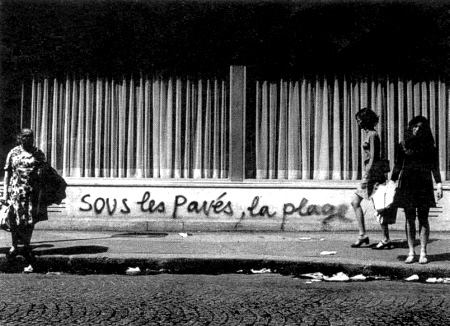
Take Back Your Summer!

The Las Vegas tourism bureau is only the latest to try to cash in on the mass refusal that’s in the air…

http://www.youtube.com/watch?v=gLf_rF35K0s&feature=autoplay&list=PL7EAF434B460937E7&playnext=7

Blog at WordPress.com.

Up ↑