Bill Maher on the need for more free time:
And the New York Times on “the busy trap”
http://opinionator.blogs.nytimes.com/2012/06/30/the-busy-trap/
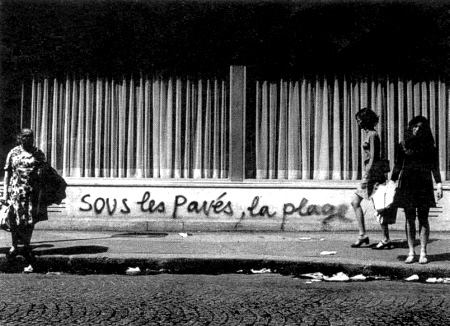
For the ones who had a notion, a notion deep inside, that it ain't no sin to be glad you're alive…
Bill Maher on the need for more free time:
And the New York Times on “the busy trap”
http://opinionator.blogs.nytimes.com/2012/06/30/the-busy-trap/
slackers unite: take back your lunch!
Addendum to an earlier post: thank you, Arizona, for making the real issues in the war on women exceedingly clear. Today, the Arizona governor signed a law outlawing abortion after 20 weeks — and the time a woman has been pregnant begins with the onset of her last period. This Orwellian rule is, of course, designed to keep women from making the choice to abort a pregnancy that, only during tests around 20 weeks, is determined to be non-viable in any way that’s less than utterly tragic. But what the rule shows more than anything is that the whole movement against women’s reproductive choice simply has nothing to do with children or their protection. The rule is, by definition, about women’s bodies and their regulation. As chilling as the passing of this kind of law is, at least it makes plain the intent of the whole movement — not to protect innocent fetuses but to make sure that the state has more power over what women do with their bodies than they do. It’s always been about women, not about children. Now, at least, the “pro-life” idea is unmasked for the “anti-woman” agenda it’s always been. What will come of this moment remains to be seen, but at least the terms are clear.
Well, it’s been a week since the big $640 million Mega Millions lotto drawing, but I’m still not over it. Not just the fact that I didn’t win — I never win, and neither do you — but the whole vibey energy is still with me. For the following reasons, I hope it’s still with you.
1. I’ve been following for years the anemic attempts of sociologists to trace workers’ “attitudes” toward work, and they’re frequently pretty useless. Survey after survey, researchers try to figure out what everybody already knows — and what people simply do not report on surveys. However, when everyone in America — the richest people I know and the most struggling — is playing the lotto, the local and national news reporters simply take for granted what we all intuitively understand: if you won the lottery, the first goddamn thing you would do is quit your job. Every single newscaster, just before the big drawing, said something to the effect of, “here comes the drawing. Will you be going back to work on Monday or not?” Headline after headline, the giant payoff did what decades of social research could not — make plain the widely-shared, basic desire for the freedom to constitute time on one’s own terms. People play the lottery in the hopes that they could finally quit the daily grind and live the life they know would do their soul justice. It’s as simple as that.
2. The enormity of the payoff speaks volumes. In a moment in which capital and its cultural mouthpieces tell everyone constantly that there just simply isn’t enough, the people throw down six hundred and forty million dollars without even trying, in pursuit of what they dream of. Nobody went broke playing the Mega. It was all just for fun, and yet all of us threw together enough money to blow our collective minds. There is plenty. The question is only — when we all put our money together, what do we want to see it go to?
3. It’s perilously close to April 15 to make this case. We all understandably hate taxes. But in the wake of so many of us, rich and poor, coming up with 640 million dollars in pursuit of the good life without even really trying, it seems apropos to wonder what the nation would be like if we were all really clear about the two things that the Lotto makes plain — that most people dream of a free life and that if we put our collective resources toward that dream we could actually, materially, achieve it. What if our idea of taxes were more like our idea of the Mega?
If it were, we’d see that if we all threw down in pursuit of our dreams, there’d be plenty — not just for a couple of folks to have their lives fucked up by an anomie-producing amount of dough — but for there to be decent health care, education, and whatever else we all wanted. As it stands now, we all get reamed on April 15 and every day throughout the year because we don’t quite get it just yet — there is plenty of wealth in America. And when we pool it, in pursuit of our dreams, holy shit. It grows and grows. Imagine if the lotto had gone on that way for another couple of weeks. We would have been talking about billions.
Why? The answer is my last point. The reason that so many folks threw down, why even the very richest folks I know played, is because it was fun. And although the austerity hounds would have us understand that any collectively pursued and funded dream is dark, grey, draconian, the truth is that playing the lottery is loads of fun. It’s sort of like why I watch the Super Bowl even though I think football, compared to basketball, for instance, is kind of boring — something about watching, and vicariously playing, a game with the entire rest of the nation is just too cool to pass up. So many people played the Mega, even those who weren’t desperate for an escape from financial hardship, because it was fun to get into such a giant, collective game.
So I ask us all to imagine something cool. Politics as a giant, clearly abundantly-funded game, that exists to pursue the collective dream of plenty and of freedom from work. For one week, Americans of all stripes dreamed and played big, and the material bigness of all that money said something kind of amazing about the power of those dreams. Who’s gonna tell you today that the dream of freedom and abundance is “unrealistic?” Tell them you’ve got six hundred forty million dollars that says they’re full of shit.
I am a Catholic. I teach at a Catholic college. I graduated from Catholic University where I was an avid student of liberation theology and the relationship of Marxism to Christian love. I learned how to write in Catholic middle and high school. I’m not a Catholic Catholic though — I mean, I think the rituals and stories are super cool, but I believe that religion is taken best when it’s taken least literally. Anthropologically. There is a lot that’s fascinating about Catholic theology, in terms of history, of the cosmos, and of social ethics, but jeez…nobody actually listens to what the dudes in the hats actually say, especially about, you know, sex. It’s in the realm of sex that the church is most wrongheaded, and, let’s face it, continually humiliates those of us who are still dedicated to the mission of social justice that in its disastrous emulation of white evangelical Protestantism, the Church has, at its highest levels at least, largely forgotten.
And now, here I am, child of a 1970s feminist who fed me hummus while forbidding Barbies and princesses with the assurance that “someday I’d understand” (turns out I do), shocked and awed that the nation is right now seriously discussing whether or not it’s legitimate for women to access contraception through their employer health plans. Seriously? Thanks, Catholic hierarchy, for making all of us associated with you look like goddamn idiots once again. Wasn’t the spectacle of Rick Santorum enough?
It’s depressing, for Catholics and for feminists. But I can’t help thinking that there might just be a silver lining to this chilling absurdity — gosh, is it okay to sexually humiliate women seeking abortion? — in the nascent coming together of the two major issues here. Perhaps when Americans notice the injustice of allowing the boss to determine what kind of health care is ok, while they also notice that this whole birth control conversation and the backlash against women’s liberation its presence represents is also an attack on the sexual revolution that came with women’s lib, they’ll see that the economic and the cultural issues around getting bossed out of your freedom are also essentially one and the same.
What is coming together in today’s debate about employer health care and birth control is the fruit of the backlash against both workers and women that began — funny — at around the same time in the mid-1970s. Of course, women are workers, but the cultural backlash and the economic backlash each had its own logic. Still, they were of a piece — a reassertion of authority through the leveraging of scarcity: Quit all that randy fun and get the hell back to work, or else. And in the aftermath, an overworked and overbossed working class is being told that it’s a matter of “religious freedom” whether or not our employers will cover basic health care — so its female members have to fight the battle of a hundred years ago for contraception and the basic sexual freedom it allows. Jesus Christ almighty, as they say in my family.
I think we’ll win the battle for contraception (and circle the wagons around abortion for the time being, since that issue won’t be resolved until the distinction is erased between this form of birth control and any other) because it looks like Obama is going to win the election. And I’ve come to believe that this is a good thing, because as Doug Henwood from the Left Business Observer points out, this fall the Occupy movement got the nation talking about capitalism. If (God forbid) a Republican wins, progressives and potential allies will be back to talking about how fucked up Republicans are. And in our two-party-corporate-bought-and-paid-for system, that would be a giant setback. Obama will win, not because of his mildly ameliorative economic policies, but because when the right tries to put the hurt on sexual freedom, the wild and randy American public always says no. I get all patriotic just thinking about it.
So perhaps in voting against the sexually repressive right wing just at the moment that the Occupy uprising has upped the uppitiness of Americans against bosses big and small, we the people will remember some connections between the movements for economic and cultural freedom that, for too many years, we forgot. And when we remember them, they come alive.
In the meantime, I’ll keep working on the Catholics to remember what makes them cool. Wish me luck.
I love stuff like this because everyone knows it’s true. But too often we pretend we’re never going to die and so make stupid, soul-deadening decisions. When I was in college, I loved Carlos Castaneda’s hippie classic, Journey to Ixtlan. One of the big life lessons of the Indian sage Don Juan was, “Death is an Adviser.” If you always live knowing that death is right around the corner, you will undoubtedly be living right. And, I think, demanding to work less and live more.
Check out “The Top Five Regrets of the Dying” here:
www.guardian.co.uk/lifeandstyle/2012/feb/01/top-five-regrets-of-the-dying
Thank you Stephen Colbert. Last night’s insanely brilliant sendup of the Citizens United decision’s impact on the presidential race was pitch-perfect, and I am so looking forward to watching what happens as Stewart and Colbert bring their critique of absurdity through satiric and hysterically funny performance straight into the heart of the 2012 race.
More important, I can finally stop seriously considering a vote for Ron Paul. I never thought I’d vote Republican, but the past weeks have found me warming to the idea. Here is why.
This fall, the Occupy movement sparked (well, joined) a process of radical social transformation that is still just getting its sea legs. And the key insight coming from the movement’s inception is that only direct action has the power to make a dent in our increasingly catastrophic business-as-usual economy. For years, masses of Americans complained and criticized and many of us attended ritualistic protests, but nothing really changed until a bunch of badasses in a park decided to act, to actively disrupt the business as usual that so many understand is driving us — economically, environmentally, culturally, politically — off a goddamn cliff. When they did, the whole game began to change.
The lesson here is that no politician — even one who seems to kind of get it, like Obama — will deliver us the change we want to see. Americans, joining protesters around the world, have relearned the lesson that only collective, disruptive activity has the power to transform. Direct, disruptive action sets the limits to what elites can pull off in their own interests. Over the last few decades, we’ve seen what has happened to the working class, the environment, and our democracy when capital has been relatively unfettered by effective opposition. Face it, if corporations in America could get away with polluting so much that we all had to walk around wearing freaking gas masks, they would. If finance capital could get away with just installing their own functionaries to run what David Harvey calls the “state-finance nexus” of the world’s nations themselves, they would. (Oh, wait…they have done that.)
Only when the process of exploitation — of human life, of nature, of politics — is disrupted collectively are limits set to it. Only movements, not lesser-of-two-evil corporate-bought-and-paid-for politicians, make gains for people over the logic of profit.
Given this, civil liberties is in many ways the only issue that matters. If the servants of finance capital in the American government can call their opponents “enemies” and detain them indefinitely, without a lawyer, without a trial, without habeas corpus, that is, pure and simple, the effective end of any really transformative movement activity. Game over. Seriously.
And Ron Paul is the only candidate taking civil liberties seriously. He is the only candidate actively opposing Obama’s recent signing of the NDAA and its indefinite detention provision. For those in the Occupy movement, this has just got to matter. I believe that it is the central issue that we face today.
I am certainly not down with Ron Paul’s fetishization of the market (although I dig the market way more than most lefties do). Or the fake libertarianism that advocates the free flow of capital across national borders but not the free flow of labor — which only puts workers everywhere at a severe disadvantage, leverage-wise. Or the “freedom” that somehow doesn’t apply to gays or to women and their reproductive decisions. And, of course, there’s the racism.
But agreeing with a candidate is not everything. I think that Obama “agrees” with me on climate — but he’s for expanded oil drilling, “clean coal” (aka bullshit), and Timothy Geithner (aka Goldman Sachs) continuing to drive economic policy. I suspect Obama “agrees” with me on reproductive freedom — but his FDA just blocked the ability of young women to get the morning-after pill over the counter. I think Obama and I “agree” on race — but he is silent on mass incarceration, the drug war, poverty and the poverty draft, and racism itself. Agreement is not everything. It’s time to be strategic.
Ultimately, I don’t believe that voting matters all that much in our winner-take-all system anyway. And a strike, or a direct action blocking something like a Keystone pipeline or a hydrofracking procedure, or a foreclosure-blocking occupation, is infinitely more effective than a vote or a bloc of votes. In a world dominated by the global flows of capital, the regulations that even the most progressive of elected national representatives might enact simply can’t have the same impact that they once did.
Still, we have an election and the Occupy movement might as well have a candidate. And it should most definitely not be the Democrat. (Ralph Nader, where are you when we need you?) As much of American political history demonstrates, when a party can count on the votes of a particular constituency, that group gets the shaft. When electoral instability in the south made civil rights a swing vote, the movement was able to extract key political concessions. Once the unions, civil rights, feminists, and gays got in bed with the Democrats, every single victory won by those movements began to be chipped away. Electoral unpredictability is key to movement power in representative politics, for whatever that is worth.
The thing is, I just can’t do it. As much as I love Paul’s line on civil liberties, not to mention the Fed, drugs, and war, I can’t bring myself to vote for someone whose cultural politics are so dangerous. But I still like the idea of the 99% being a swing vote and watching the politicians squirm (and pander).
Now that Stephen Colbert (and his SuperPAC money) look to be joining the fray, we may just have a candidate. In organizing for a Colbert candidacy, we could both feel our power and, not for nothing, have some fun. Every time we vote for a Democrat or a Republican, we are voting “yes” to the idea that this system is legitimate. Colbert mocks both by not caring which ticket he runs on. We need to take our real movement activity seriously but mock the American political system for the goddamn utter absurdity, the obnoxious pageant of the 1%, that it is. And who better to lead us in laughing the corporatocracy off the world stage than Stephen Colbert?
Check out my new essay at the Social Science Research Council’s “Possible Futures” digital forum on Occupy Wall Street.
I’m a pretty happy person — generally optimistic and resilient. So I’m actually surprised at how devastated I am today. When Zuccotti Park was raided and dismantled by the NYPD in the early hours of Tuesday morning, I was bummed, certainly. But I wasn’t exactly surprised — as other encampments were destroyed around the country, it became more and more clear that this was not the result of isolated moves by different mayors and police departments. This was the coordinated strategy of the other side, and we had to know they would come for New York too.
And I really didn’t think that getting rid of the encampment would be a movement-killer. Too much cultural change had taken place during the fall. There was no going back. Americans were, as a result of the protests, finally waking up to the realities of class exploitation in this country, and to the potential effectiveness of a protest movement to challenge them. And you can’t really unring that bell.
Besides, I sensed that the structural limits of an encampment would eventually put a damper on the movement anyway. For one thing, the winter — what a drag that would have been. And the more I heard about the difficulties of living side-by-side in tents, the more I feared that the energy of the protest would be sunk under the weight of the heavy shit that inevitably comes down when people who don’t really know one another share living space.
So the protesters can’t live there. That’s alright, I told myself. I thought of Union Square in the early decades of the 20th century — no one had to move in permanently for it to be a consistently radical political space. I felt sure Zuccotti could morph into something like that, and continue to be a place where people would go to express their critique of the domination of regular folks by corporations and especially by finance capital. And Thursday’s Day of Action, beginning with a pretty bold attempt to disrupt trading at the NYSE and ending with a celebratory march across the Brooklyn Bridge — complete with super cool “Occupy” Bat-Sign laser graffiti on the Verizon building along the way — convinced me that the attempt to repress and “clear out” the movement would, on so many levels, just make it stronger.
And then today, I went to Zuccotti Park. And man, it was bleak. The vibrant, democratic, energetic public space that sparked a massive social movement and a new national conversation was…gone. Just gone. In its place was concrete. Gray concrete. And, in an utter mockery of the idea that the park was cleared of protesters in the interest of ease of public access to enjoying the park, the concrete was surrounded by barricades, with only two openings to get in or out.
The barricades were lined on the outside with NYPD, and patrolled hysterically by yellow-vested private security workers on the inside (“you can’t stand there! you can hold a poster but you CANNOT, I REPEAT, CANNOT set it down next to you! and (my absurd favorite) NO, people can NO LONGER bring food into the park UNLESS IT IS FOR YOU PERSONALLY.” God forbid you should feed anyone).
There were a handful of protesters there. But everyone seemed kind of lost, and the people’s mic announcement of a protest march to Foley Square was pretty anemic. I walked by a sad, defiant little box of books labeled “The People’s Library,” in the spot the People’s Library — basically the coolest, most vibrant and happening book(non)store I’d ever been in — had occupied. I couldn’t believe how small the park looked without all the energy, all the hope, all the conversation, all the politics, all the food, all the speeches, all the tour buses going by with people up top putting their fists into the air and giving the peace sign in solidarity and celebration. I saw a tour bus pass the park again today. Those riding up top looked as glum as those of us inside the park.
I’m an optimist. I know the Empire always strikes back, but I believe that the light side of the force emerges victorious in the end. And I’m sure I’ll feel better tomorrow. But the blunt force of repression, politically risky as it is, comes down because, quite simply, it has its own, very serious efficacy. It works. It snuffs out. Not forever…the return of the repressed is inevitable. But in the meantime, a space that was alive with hope and energy and possibility is dead.
I’ve always been more concerned with time than with space. As in, I study the collective withdrawal of the labor time supplied to capital as both a means to an end — higher wages and more leverage through restriction of supply relative to demand — and as an end in itself — free time for people to really live. I’ve actually never really thought that space was the most politically important angle. But Zuccotti has taught me otherwise, and I know I’m not alone.
The thousands of people who showed up to kick it in Liberty Square every day came to make their voices heard, but they also came because there is a real hunger for an open, radically democratic, politically vibrant public space that the park fed. Most of the spaces of everyday life scream, “if you’re not working or buying something, move it along!” (Former exceptions like college campuses are being colonized by the forces of standardization and alienated work more and more every day — “stop that useless thinking! get to work!”) Zuccotti seems like a dream now, a magical moment, a powerful memory. I hope the memory continues to inspire people not just to stand up for themselves, for people before profit, in their communities and their workplaces, but also to continue to create spaces of freedom inside the everyday functioning of the profit machine. Lord knows we need it.
La lucha sigue, si. You cannot evict an idea whose time has come, yes. But when there is a loss, you grieve. Only then do Joe Hill’s words really resonate: “don’t mourn, organize.”

 slackerpolitics